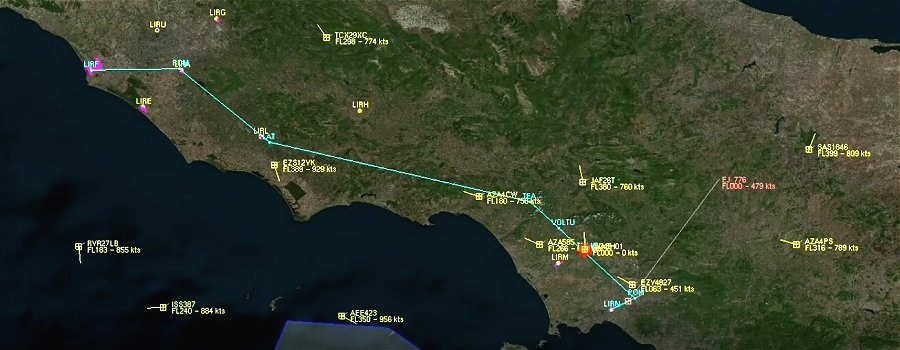
ADS-B import for ATC Simulation
Integrating ADS-B (Automatic Dependent Surveillance-Broadcast) into Air Traffic Control (ATC) simulation bridges the gap between theoretical training and live-airspace realities. When comparing this process between a generic "ADS-B Import" (a data integration method) and vsTASKER (a dedicated simulation platform by VirtualSim), the distinction lies between raw data playback and a full-scale, customizable simulation environment.Key distinctions and capabilities of handling ADS-B for ATC simulation are outlined below.vsTASKER (Dedicated Simulation Platform)vsTASKER is a robust real-time simulation toolkit that provides a complete, out-of-the-box environment for building traffic and handling real-time data streams.Live Streaming: It features native components capable of importing real-time ADS-B streams from online providers (like the OpenSky Network).Data Extrapolation: Each imported aircraft holds dynamic properties. If the ADS-B stream drops out or delays, vsTASKER extrapolates the aircraft's position between updates.Mixed Traffic: It allows you to mix live ADS-B traffic with simulated background traffic for comprehensive training scenarios.Highly Customizable HMI: Users can design custom, functional ATC radar consoles and control panels using the built-in Human-Machine Interface (HMI) builder.ARINC 424 Support: It imports navigation databases, allowing scenarios to align perfectly with standard airway procedures.Generic ADS-B Import (Data Integration)Importing ADS-B data via an open-source tool, scripts (e.g., Python), or a custom-built API generally refers to the raw ingestion of surveillance data into an existing framework.Playback & Record: Data is often parsed from local receivers (like a Dump1090 setup) or APIs to create tracking scenarios, but this usually relies strictly on historical or live flight data.Standalone Nature: It provides exactly what is in the broadcast (position, altitude, speed). However, it lacks an integrated ATC logic engine or an intelligent pilot response system out of the box.Cybersecurity Testing: Custom imports of ADS-B feeds are often used in educational settings to simulate signal vulnerabilities, spoofing, or ghost aircraft.Feature ComparisonFeature / CapabilityvsTASKER Simulation PlatformGeneric ADS-B Import (API/Scripts)Real-time ADS-B IngestionYes (Dedicated component for external providers)Yes (Via raw data/SDRs)Simulated Pilot ResponseYes (AI entities follow ATC instructions)No (Requires external logic)Custom ATC Radar UIYes (Built-in HMI & Control Panels)No (Visualization requires separate GUI/Map tools)ARINC 424 Navigation IntegrationYesNoScenario Control (What-if Analysis)High (Accelerate/pause/edit parameters)Low (Limited to playing back real-world feeds)Explore the VirtualSim vsTASKER page for more details on their ATC simulation toolkits.Could you tell me what your primary goal is (e.g., ATC training, system testing, or cybersecurity research) so I can explain which approach fits your needs better?
Importing Automatic Dependent Surveillance-Broadcast (ADS-B) data into an Air Traffic Control (ATC) simulation using vsTASKER represents a powerful approach to blending live, real-world data with synthetic simulation environments.vsTASKER by VirtualSim is a C++ component-based simulation engine and scenario generator. It is heavily used for developing ATC training platforms, radar simulations, and "what-if" airspace analysis.📡 How ADS-B Import Works in vsTASKERStarting in version 7, vsTASKER introduced native handlers designed specifically to ingest and parse real-time global flight data streams.Supported Data Providers: vsTASKER can directly ingest live streams from open networks and aviation APIs, including OpenSky Network and Aviation Edge.The Ingestion Process: The software connects to the API endpoint, streams JSON/Hex telemetry packet data, and instantly instantiates those real flights as dynamic entities inside the simulation loop.High-Capacity Performance: The runtime engine is built for heavy lifting; benchmarks show vsTASKER running at 30 Hz while handling up to 12,000 live imported aircraft simultaneously.Dead Reckoning / Extrapolation: Because live ADS-B streams usually update at intervals (e.g., every 30 seconds), vsTASKER uses internal physics and flight dynamics to smoothly extrapolate an aircraft's position between packet updates.⚙️ Core Capabilities in ATC ConfigurationsWhen building an ATC simulation around imported ADS-B traffic, vsTASKER acts as a flexible "white-box" framework:Mixing Live & Synthetic Entities: You can overlay real-world flights with entirely simulated entities (like a military drone swarm or a flight trainee's aircraft) to train air traffic controllers on handling mixed-airspace conflicts.HMI Integration: Live telemetry maps directly onto Human-Machine Interface (HMI) modules. This can be built using vsTASKER’s native tools or hooked into industry-standard UI suites like Presagis VAPS or GL-Studio.Radar Simulation Integration: By combining vsTASKER with vsRAD (VirtualSim's radar module), the raw ADS-B coordinates can be converted to mimic authentic primary/secondary surveillance radar sweeps, complete with authentic display lag and sweep lines.Flight Plan Validation & ARINC 424: Imported traffic can be benchmarked against standard ARINC 424 navigation databases to analyze routing efficiency, standard terminal arrivals (STARs), and deviations.🛠️ Primary Use CasesLow-Cost Tower & Terminal Radar Approach Control (TRACON) Trainers: Populating an airfield with thousands of real aircraft without having to manually script traffic behavior.Airspace Capacity & Stress Testing: Running real-world historical traffic data at accelerated speeds (up to 40x) to monitor sector bottlenecks, arrival/departure delays, and flown distances.UAV Airspace Coexistence: Injecting a simulated Unmanned Aerial Vehicle (UAV) into a dense, live civilian commercial airline stream to test conflict-resolution and sense-and-avoid algorithms.Cybersecurity Training: Because ADS-B is unencrypted, researchers use setups like this to test how air traffic controllers handle data-spoofing, ghost targets, or signal jamming.If you are developing a project, let me know:Are you looking to use a live stream or reply historical ADS-B logs (like data from FlightAware/ADSB-Exchange)?Will you be using vsTASKER's native HMI or connecting it to an external 3D visual generator (like OpenSceneGraph or a game engine)?I can provide specific guidance on setting up the C++ interfaces or data architecture.
Reference video showing features of vsTASKER
How the Import Process WorksvsTASKER handles ADS-B integration through built-in components and data processing tools:Live Streaming: vsTASKER imports real-time ADS-B streams directly from online data providers.Aircraft Dynamics: Each imported aircraft holds its own dynamics. If the stream has brief interruptions, vsTASKER automatically extrapolates the aircraft's position between updates.Database Integration: The imported tracks can be seamlessly merged with ARINC 424 navigation databases to align with standard airways and waypoints.Custom Visuals: The system allows builders to design bespoke ATC display consoles (using C++, Qt, OpenGL) to monitor the live ADS-B traffic.
Downlaod - ADS-B import for ATC Simulation
Request for Trial licence
Download User Guide & reference manual
Primary Use CasesIncorporating real-world ADS-B data into vsTASKER is highly beneficial for several simulation needs:Controller Training: Trainee air traffic controllers can practice handling actual, current-day traffic loads rather than just scripted, textbook scenarios."What-If" Analysis: Planners can test new airspace routes, sector limits, or holding pattern algorithms against the backdrop of real, heavy global traffic.Large-Scale Traffic Simulation: The software can process massive simulations running with thousands of aircraft concurrently, running much faster than real-time.Radar vs. ADS-B Comparison: Users can evaluate the differences in reliability and precision between traditional radar data and ADS-B broadcasts.