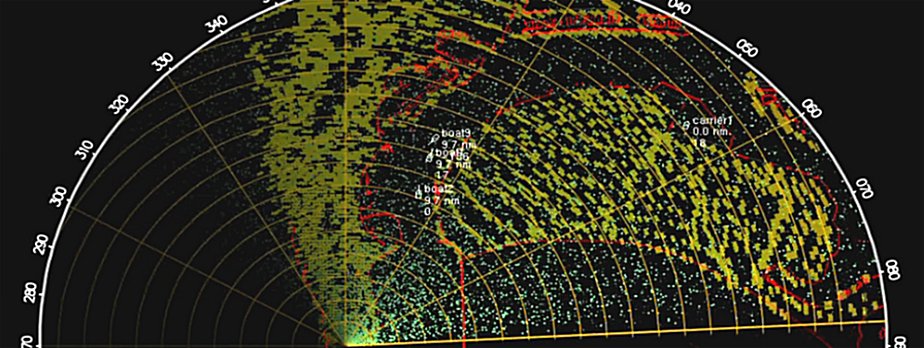
vsTASKER is a comprehensive, C++-based visual modeling and simulation software developed by VirtualSim. It is widely used in defense and aerospace to build, test, and analyze complex tactical scenarios, including maritime surveillance and radar system modeling.Key Capabilities for Maritime SurveillancevsTASKER provides a highly flexible environment for simulating naval operations and maritime surveillance:Scenario Building: Uses S-57 nautical charts (standard electronic navigational charts) and digital terrain elevation data to create accurate ocean and coastal environments.Entity Management: Simulates thousands of moving entities simultaneously—including ships, submarines, UAVs (drones), and satellites—with realistic movement and speed logic.Sensor Integration: Supports the detailed modeling of various sensors, including Electro-Optical/Infrared (EO/IR) cameras, SAR (Synthetic Aperture Radar), and MTI (Moving Target Indication).Radar Simulation ApproachInstead of generating raw, physics-based electromagnetic waves on its own, vsTASKER acts as the "tactical brain" and scenario driver. It handles this in two ways:Detection Logic: vsTASKER calculates whether targets are in the radar's line-of-sight and within range, taking earth curvature, terrain, and sea states into account.Integration with vsRAD: For detailed raw data output (such as dB per angle and range), vsTASKER is often paired with vsRAD, a companion toolkit dedicated to rendering raw sensor data and synthetic radar displays.Data Streaming: Once the simulation engine detects an entity, vsTASKER can output standard formats like AIS/ARPA or custom UDP streams to feed real-world operator consoles or third-party visualizers.Primary Use CasesSensor Performance Analysis: Tests the boundaries of sensor and radar coverage by running batch simulations and Monte Carlo variations.Operator Training: Can be linked to Man-in-the-Loop systems and tactical displays to train radar and sonar operators in identifying shadow vessels, tracking targets, and navigating congested waters.Autonomous Navigation: Tests the embedded logic of Unmanned Aerial or Underwater Vehicles (UAVs/UUVs) by feeding simulated radar and sonar inputs directly into the drone's path-finding algorithms.You can explore more about these integrated setups directly on the VirtualSim Radar Simulation page.Could you let me know what specific type of maritime simulation you are looking to build (e.g., coastal defense, drone tracking, or operator training)? This will help me give you more specific details on how to set up the nodes in vsTASKER.
vsTASKER is a powerful visual development environment and software development kit (SDK) used to build real-time, interactive, and high-fidelity tactical simulations for the defense and maritime sectors.When deployed for Maritime Surveillance Radar Simulation, vsTASKER acts as the central scenario engine and logical orchestrator. It populates the environment with terrain data, manages entity behaviors, and bridges complex radar physics models with visual human-machine interfaces (HMI).Core Roles of vsTASKER in Maritime Radar Simulation1. Geospatial and Tactical Environment SetupS57 Electronic Navigational Charts: vsTASKER natively imports S57 maritime charts to build accurate coastal and deep-water tactical maps.Sensor Placement: Users can realistically position coastal surveillance radar arrays (e.g., at real-world vantage points), shipborne radars, or airborne radars mounted on Unmanned Aerial Systems (UAS).Entity Generation: It handles the motion, speed, routes, and waypoints for thousands of independent maritime vessels, including cargo ships, military frigates, small crafts, or surface threats.2. Advanced Multi-Layer Radar ModelingWhile vsTASKER manages the tactical scenario logic, it allows for scalable radar simulation fidelity depending on the target use case:High-Order Functional Simulation: Evaluates radar range, field of view (FOV), target line-of-sight (LOS), and basic tracking constraints. This is used for high-volume scenario testing and optimization metrics.Physical & Raw Data Simulation: vsTASKER seamlessly interfaces with physical radar modeling plug-ins (such as Alyotech physics engines or OKTAL-SE modules). This allows users to calculate raw signal returns (dB per angle and range), account for target aspect angles (e.g., F16, A340, or specific ship structures), and inject realistic sea/rain clutter.3. Interoperability and Data Fusion TrainingStandardized Output Streams: The system can convert internal target tracking data into real-world maritime data formats. It generates standardized text strings such as NMEA 0183 and can broadcast them over UDP networks.Emulator Bridging: This enables vsTASKER to emulate commercial maritime radar servers (like Terma SCANTER or Automatic Radar Plotting Aids - ARPA) to drive real operational Command and Control (C2) or Data Fusion hardware.HLA/DIS Compliance: It easily integrates with High-Level Architecture (HLA) and Distributed Interactive Simulation (DIS) frameworks, enabling joint-force exercises where simulated maritime radars track assets controlled by external systems.Workflow Breakdown: How a Simulation is Built [ vsTASKER Graphical IDE ]
(Define S57 Maps & Waypoints)
│
▼
[ Real-Time Scenario Engine ] ──► [ External Radar Physics Engine ]
(Moves targets & manages logic) (Calculates raw dB reflections)
│ │
▼ ▼
[ Integrated HMI Displays ] ◄─────────────────────┘
(Generates PPI Radar screen / ARPA tracks)
Design Phase: Using the vsTASKER GUI, engineers place coastal radar installations, set up shipping lanes, and configure environmental parameters.Execution Phase: The core simulation engine executes the scenario at high frame rates (typically 30Hz or higher), calculating precise target azimuths, distances, and orientations relative to the radar.Visualization Phase: Real-time data feeds into visualization overlays like vsVIEWER or standalone tactical HMIs to present operators with authentic Plan Position Indicator (PPI) sweeps, target tracking symbols, and guard zone alerts.