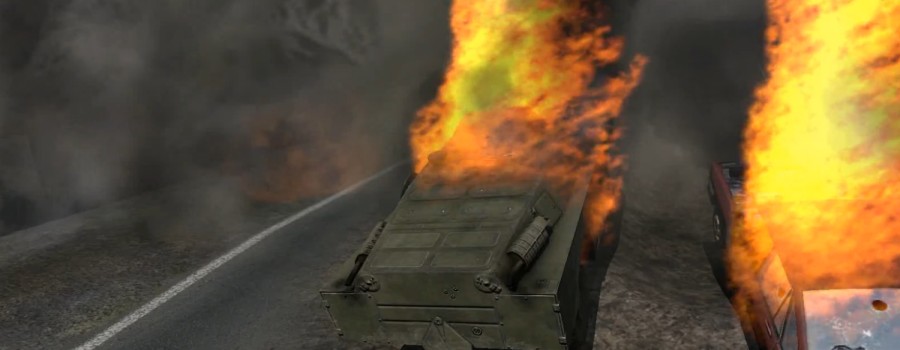
VBS-3 integration using ASI Interface
Integrating VBS-3 (Virtual Battlespace 3) with vsTASKER using the ASI (Application Scripting Interface) allows external software to communicate with the VBS3 engine. While vsTASKER acts as the high-level logic controller, VBS3 handles the physics, graphics, and line-of-sight in real-time.How the Integration WorksASI Interface: VBS3 provides the ASI via a special plugin loaded directly into the simulation. vsTASKER connects to this plugin over a Local Area Network (LAN).Bidirectional Communication: vsTASKER sends native VBS3 script commands to the engine, while VBS3 sends real-time updates regarding entity positions, damages, and combat data back to vsTASKER.Dynamic Scenario Creation: When vsTASKER starts, VBS3 builds the necessary platforms and units. When vsTASKER stops or resets, the platforms are automatically removed.Key Benefits of using vsTASKER to Drive VBS-3No Scripting Required: Users do not need to write or debug complex VBS3 scripts. vsTASKER encapsulates VBS3 functions into visual tasks and logic nodes that can be dragged and dropped.Flexible AI: vsTASKER can enable, disable, or alter the behavior of VBS3 AI entities based on changing situations and time.Visual Monitoring: vsTASKER allows users to watch the logic of the scenario run in real-time without getting bogged down by the VBS3 script debugger.Limitations to ConsiderPerformance Limits: The ASI interface is generally not the most efficient when it comes to performance. Because of this, the integration works best for smaller-scale projects or scenarios with a limited number of controlled entities.Update Bottlenecks: While vsTASKER can easily populate VBS3 with entities, sending too many entity updates from VBS3 back to vsTASKER can cause performance dips.For more details on setting up the connection and compiling the required plugin, you can check out the official vsTASKER VBS-3 Sample Documentation.Would you like to know more about how to set up the vsTaskerPlugin.dll or discuss specific tactical modeling use-cases you are trying to achieve with VBS-3?
The VBS-3 integration using the Application Scripting Interface (ASI) in vsTASKER serves as a bidirectional gateway that allows vsTASKER to act as an external tactical and AI command engine over Bohemia Interactive Simulations' VBS3.This setup allows users to control VBS3 entities remotely by offloading scenario logic, doctrines, and mission rules to vsTASKER, while letting VBS3 handle localized tasks like platform dynamics, line-of-sight, and physics.Key Technical ArchitectureLAN Gateway Communication: vsTASKER connects to VBS3 over a Local Area Network (LAN) using a custom plugin (vsTaskerPlugin.dll) installed directly inside the VBS3 installation directory.Encapsulation of Commands: VBS3 script commands and functions are fully encapsulated within vsTASKER's visual actions, logic blocks, and tasks. You can assign these scripts to entities using standard drag-and-drop operations.Decoupled Lifecycle: Scenario management is rapid because the engines are separated. When vsTASKER starts, it initializes and creates all platforms inside VBS3 through the ASI link. When vsTASKER stops, it automatically instructs VBS3 to clean up and delete those entities.Primary BenefitsNo VBS3 Reloading: Eliminates the typical "try and error" delay loop. Scenarios can be restarted or tweaked in vsTASKER without restarting the VBS3 software engine.Visual Debugging: Avoids the standard, tedious text-based VBS3 script debugger. Tactical logic can be monitored visually in real time within vsTASKER.No Extra Runtime Cost: Deployed scenarios built with vsTASKER do not require separate runtime licenses for execution.Practical Performance LimitationsWhile the ASI interface is highly extendable—providing users with full source code to modify how data is translated—it is not performance-efficient for massive entity counts.Best Use Case: Populating VBS3 scenarios with a small number of custom-controlled entities coming from vsTASKER.Bottleneck: Bidirectional updates (sending state details from VBS3 back to vsTASKER) scale poorly and should only be targeted at a minimal subset of critical entities.Note: Bohemia Interactive has largely superceded the legacy ASI with the VBS Simulation SDK for primary customization. For high-density visual or interoperability needs, modern setups often utilize vsTASKER via CIGI to communicate with VBS-IG (Image Generator) platforms.If you are currently setting up this environment, let me know:What version of VBS3 (e.g., 32-bit or 64-bit) are you executing?Approximately how many active entities do you plan to track simultaneously?I can provide the specific directory placement rules for your vsTaskerPlugin.dll file
Reference video showing features of vsTASKER
vsTASKER as a Standalone Logic EngineWhile the ASI interface enables direct script communication, it can become inefficient for large-scale scenarios with hundreds of entities. To overcome this, vsTASKER offers advanced alternatives for visual behavior design:CIGI (Common Image Generator Interface): For massive visual overhauls, vsTASKER uses CIGI to connect with VBS-IG (Image Generator). This allows the user to build all scenarios, tactics, and AI models in vsTASKER while utilizing VBS-IG for advanced, high-performance graphical rendering.Modular Code Generation: vsTASKER can independently generate C++ logic and artificial intelligence doctrines that can be exported and embedded into other third-party engines.
Downlaod - VBS-3 integration using ASI Interface
Request for Trial licence
Download User Guide & reference manual
ntegrating VBS-3 (Virtual Battlespace 3) with vsTASKER via the ASI (Application Scripting Interface) allows vsTASKER to act as a remote simulation engine and AI controller, while VBS-3 handles graphics, terrain, and platform dynamics. vsTASKER uses a LAN connection and a specialized plugin to send VBS script commands and receive entity updates.ASI Integration Use CaseUsing the ASI interface, vsTASKER offloads complex scenario building from native VBS-3 scripts to a visual node/action system.Key functionalities of this use case include:Entity Synchronization: vsTASKER populates the VBS-3 scenario and receives position updates for entities, although this update loop is better suited for low-entity counts due to ASI's performance limitations.Logic Encapsulation: All native VBS-3 functions and script commands are encapsulated into actions within vsTASKER, making it easy to attach doctrines and behaviors without opening the VBS script debugger.Dynamic AI Toggling: vsTASKER can turn VBS-3’s native AI on or off depending on the time or situation, relying on its own customizable logic.Seamless Teardown: When the vsTASKER simulation starts, VBS-3 automatically builds the specified units. When vsTASKER stops, it cleans up all spawned platforms and units automatically.